
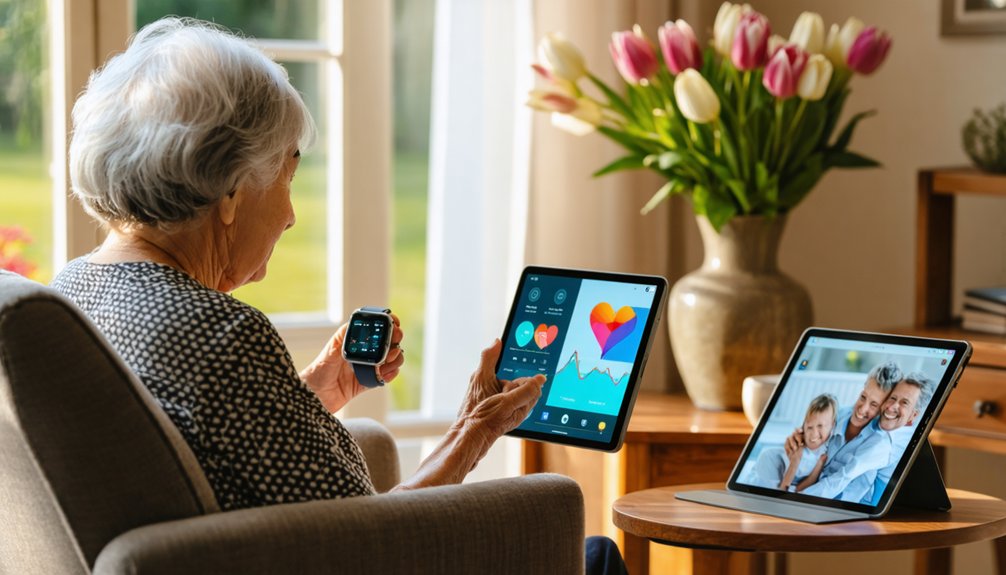

Smart devices play a pivotal role in helping seniors track key health data effectively. These wearable devices enable real-time monitoring of essential metrics like heart rate, blood pressure, and activity levels. This continuous data exchange promotes proactive healthcare management and enhances early detection of health issues. Additionally, smart medication management tools improve adherence to treatment plans, promoting independence and safety. As the terrain of technology evolves, additional perspectives into how these devices revolutionize senior care continue to emerge.
The Rise of Wearable Health Devices Among Seniors
As the aging population becomes increasingly health-conscious, the adoption of wearable health devices among seniors is on the rise, reflecting a deep-seated shift in how this demographic approaches personal wellness. Projections indicate that by 2025, half of seniors will integrate wearables into their daily lives, spurred by the need for health and wellness alerts. However, the user experience remains a barrier; many devices are perceived as complex and uncomfortable, deterring consistent use. Additionally, affordability plays a vital role, as lower-income seniors may struggle with access. Despite these challenges, the burgeoning market—valued at $33.85 billion in 2023—suggests a growing acceptance, driven by potential improvements in health outcomes and a desire for belonging to a community that values proactive health management, where affordability plays a pivotal role. As a result, wearable device usage can create a more holistic view of a patient’s well-being, enhancing their overall healthcare experience. As wearable technology continues to evolve, the adoption among older adults will further bolster the support for seniors living independently while ensuring their safety.
Real-Time Monitoring for Better Health Outcomes
Real-time monitoring systems are revolutionizing healthcare delivery for seniors, substantially enhancing health outcomes and reducing unnecessary hospitalizations. These systems continuously track critical health metrics, such as blood pressure and heart rate, enabling early detection of physiological changes that prevent emergencies. Comprehensive geriatric assessments encompass validated tools for various health domains, further supporting coordinated care efforts. The health benefits extend beyond immediate care; coordinated monitoring allows healthcare professionals to analyze data trends and adjust treatment plans swiftly. Studies indicate significant reductions in hospitalizations and emergency visits among seniors utilizing this technology. The implementation of digital exhaust allows for a much more thorough analysis of seniors’ health through passive, zero-interaction data collection. Moreover, as the population of Canadians aged 65 years and older is projected to reach 9.5 million by 2030, the role of these technologies becomes even more critical in supporting independent living for seniors.
The Role of Telehealth in Senior Care
The emergence of telehealth has substantially revolutionized senior care by providing accessible and convenient healthcare solutions customized to the unique needs of older adults. With a notable 63-fold increase in telehealth visits during the pandemic, 43.3% of patients aged 65+ have embraced these services. Telehealth benefits extend beyond mere access; hospital readmission rates for seniors have decreased by 23% while patient satisfaction scores have surged by 35%. Furthermore, telehealth fosters enhanced senior engagement, with 55% of healthcare providers acknowledging its role in improving care. Despite challenges such as technical barriers, especially among rural seniors, telehealth continues to demonstrate its value in promoting better health outcomes and fulfilling the critical needs of the older population. In particular, telehealth platforms play a pivotal role in providing senior care solutions by facilitating easy access to medical appointments and health monitoring. This innovative approach to care aligns with the growing trend of technology breakthroughs that reshape elderly care, improving safety, independence, and health monitoring. Notably, virtual visits have been found to be the same or better than traditional visits for a plurality of patients.
Smart Medication Management for Improved Adherence
Smart medication management systems are revolutionizing the scenery of adherence for older adults, substantially enhancing their health outcomes. With the number of smart medication adherence products doubling since 2021, these technologies offer innovative adherence strategies, such as automated dispensing and real-time tracking of medication intake. Older adults, averaging 76 years, show a positive acceptance of these systems, benefitting markedly from customizable medication prompts and alerts that encourage adherence to complex regimens. Real-time data integration facilitates seamless communication with healthcare providers, allowing for personalized adjustments in treatment plans. Additionally, improved adherence correlates with notable reductions in hospital visits, reaffirming the crucial role of smart technologies in ensuring seniors manage their health effectively and maintain a sense of independence in their daily lives. The increasing percentage of Canada’s older adult population emphasizes the urgency of supporting medication adherence to enhance health outcomes for this demographic.
Enhancing Safety With Fall Detection Technology
As older adults increasingly turn to smart medication management for enhancing their health outcomes, the integration of fall detection technology emerges as another essential component of maintaining safety and independence.
With one in four older Americans experiencing falls annually, this technology plays a significant role in fall prevention and elderly safety.
Medical alert systems equipped with advanced sensor technologies can accurately detect falls, automatically alerting caregivers or emergency services, thereby providing indispensable support.
Particularly for individuals with previous falls or mobility issues, these systems strengthen confidence and encourage aging in place.
This customized approach not only safeguards seniors but also promotes a sense of belonging and reassurance for families, ensuring peace of mind in the living environment.
AI-Powered Insights for Predictive Health Analytics
AI-powered perspectives are revolutionizing healthcare by leveraging predictive health analytics to enhance patient outcomes, particularly among seniors. Utilizing predictive modeling and health informatics, these technologies support early detection mechanisms through continuous monitoring of crucial signs and activity levels.
For instance, AI algorithms can predict up to 85% of potential falls 72 hours in advance, allowing for timely interventions. Moreover, predictive models identify early signs of chronic disease exacerbations, substantially improving treatment efficacy through personalized care pathways. By streamlining healthcare resource allocation, these methods also nurture a more efficient approach to managing care for high-risk patients.
Integrating Smart Devices for Comprehensive Health Tracking
The integration of smart devices marks a significant advancement in health tracking for seniors, complementing the predictive capabilities previously discussed.
These technologies facilitate seamless data exchange, enabling 44% of Americans with wearable health devices, like smartwatches, to share crucial health metrics with their healthcare providers.
Health analytics derived from these interconnected systems enhance monitoring by providing exhaustive profiles that track heart rate, blood pressure, and activity levels.
This unified approach allows caregivers and family members to monitor their loved ones in real time, substantially improving health outcomes.
With tools like Theora Connect™, seniors, especially those with cognitive impairments, benefit from integrated support systems, ensuring health is continuously monitored and potential issues are addressed proactively.
Empowering Seniors Through Technology and Connectivity
A growing number of seniors are embracing technology as a means to enhance their quality of life and maintain independence. With 67 percent of adults aged 50-plus making tech purchases, digital literacy is increasingly essential.
Seniors recognize the importance of social connections through platforms that bridge distances, nurturing personal relationships and community engagement.
Despite concerns over age-appropriateness, the gap in smartphone ownership has narrowed substantially, indicating a willingness to adapt.
Additionally, 64 percent express confidence in their digital skills, pivotal for utilizing online resources and staying connected with loved ones.
As the market for senior tech services continues to grow, enabling seniors through technology promotes both independence and social engagement, allowing them to thrive in their own homes.
References
- https://www.scnsoft.com/healthcare/wearable-technology-for-elderly
- https://worldhealth.net/news/easy-to-use-tech-devices-senior-wellness/
- https://www.srgseniorliving.com/blog/how-technology-enhances-senior-living-2025/
- https://www.aarp.org/pri/topics/technology/internet-media-devices/2025-technology-trends-older-adults/
- https://www.factmr.com/report/senior-tech-services-market
- https://leadingage.org/3-trends-in-senior-care-technology/
- https://www.definitivehc.com/blog/aging-in-place-driving-innovation
- https://www.ageinplacetech.com/page/market-overview-2025-technology-aging-january-2025
- https://www.alm.com/press_release/alm-intelligence-updates-verdictsearch/?s-news-14796165-2025-11-30-empowering-seniors-with-moving-with-purpose-the-rise-of-gps-devices-for-independent-living
- https://www.thewinsberg.org/blog/wearable-technology-for-seniors-a-comprehensive-guide/