
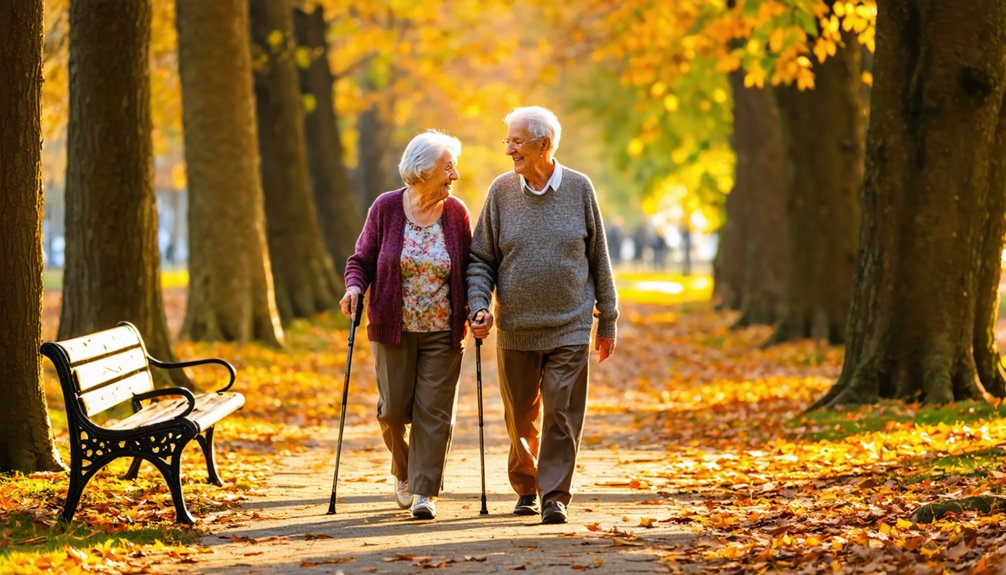

Regular walking plays a vital role in enhancing longevity for seniors. Research indicates that consistent walking, ideally for at least 150 minutes weekly, can substantially reduce mortality risk. Brisk walking enhances health outcomes even more, with benefits for cardiovascular health and functional capacity. Moreover, walking nurtures social connections, augmenting emotional well-being. By incorporating walking into daily routines, seniors can experience substantial improvements in their quality of life. Uncover additional perspectives and strategies to maximize these benefits.
The Link Between Walking and Increased Life Expectancy
Research has consistently shown a significant link between regular walking and increased life expectancy, particularly among seniors. Daily walking is correlated with an 81% reduction in mortality risk for stroke survivors, emphasizing its deep impact. Engaging in community walking programs promotes social connections, which further enhance mental and emotional well-being. Especially, the Iowa 65+ Rural Health Study demonstrates that seniors who walk regularly enjoy longer life expectancy, with benefits persisting across diverse demographics. Additionally, walking 160 minutes daily has been associated with life expectancy gains, further supporting the positive effects of this simple activity. Moreover, an extra 111 minutes of walking daily has been shown to add up to 11 years of life for less active individuals, highlighting the profound impact of increasing daily walking duration.
Furthermore, regular physical activity can reduce mortality risk significantly, emphasizing the importance of maintaining an active routine. The least active individuals experience significant mortality risk reductions with even modest increases in walking. This evidence underlines the importance of community engagement in promoting walking, reinforcing both physical health and essential social bonds that enhance the lives of older adults, promoting a sense of belonging and support.
Optimal Duration and Consistency of Walking
Optimal Duration and Consistency of Walking
Ideal walking duration and consistency are crucial factors influencing longevity in seniors. Engaging in a routine that includes at least 150 minutes of moderate walking weekly, ideally spread across five days, can yield beneficial health impacts. Research indicates that daily routines involving a minimum of 4,000 steps can lead to a 26% reduction in mortality risk. Moreover, maintaining a frequency of walking three or more days a week enhances this benefit, demonstrating a significant correlation with longevity. By progressively increasing walking frequency and duration, even previously inactive individuals can experience substantial improvements in life expectancy. This commitment not only promotes a sense of community but also nurtures overall wellness, encouraging seniors to enjoy a more fulfilling and longer life. Additionally, regular walking can significantly improve cardiovascular health, reducing the risk of heart disease and enhancing overall quality of life for seniors. Furthermore, walking slightly faster can lead to meaningful improvements in physical function among older adults, further contributing to their longevity. Achieving just 4,000 steps one or two days a week is associated with a lower risk of mortality and cardiovascular disease, showcasing the importance of even modest activity levels.
Pace and Its Impact on Mortality Reduction
The pace at which seniors walk plays a vital role in influencing their overall mortality risk. Research indicates that brisk walking for at least 15 minutes daily is associated with a notable 20% reduction in total mortality, showcasing significant walking benefits. In contrast, slow walking exceeding three hours yields only a non-significant 4% reduction. The minimum effective dose, brisk walking, adheres to established pace thresholds that maximize health outcomes. Additionally, individuals with comorbidities, such as hypertension, experience even greater mortality risk reduction. Recent findings from a study indicate that steps per day significantly contribute to lowering all-cause mortality rates in middle-aged adults. Thus, seniors are encouraged to embrace a brisk walking pace, fostering a sense of belonging to a community prioritizing health and longevity while traversing various pace thresholds on their path towards improved well-being. Fast walking has been shown to be a low-cost and accessible way to enhance health, particularly in underserved groups. Moreover, even those with baseline comorbidities can reduce their mortality risk significantly through regular brisk walking.
Improving Cardiovascular Health Through Walking
Walking serves as a powerful tool for improving cardiovascular health, especially among seniors. Research indicates that achieving daily step goals can substantially reduce the risk of cardiovascular events. For instance, individuals taking around 4,500 steps daily observed a staggering 77% lower risk compared to those with fewer than 2,000 steps. Further benefits emerge with every additional 500 steps, translating to a 14% lower risk of heart disease or stroke. Regular walking, exceeding 4 hours weekly, is linked to reduced hospitalizations due to cardiovascular disease, showcasing its critical role in promoting cardio health. For seniors, meeting modest step targets can yield substantial protective effects, promoting a healthier, more dynamic community and encouraging social engagement in physical activity. An additional 500 steps per day significantly contributes to improved heart health.
Enhancing Functional Capacity in Seniors
As older adults seek to maintain independence and enhance their quality of life, engaging in structured walking programs emerges as a promising strategy.
Research reveals that increasing walking pace by 14 steps per minute leads to significant functional improvement, with a target pace of approximately 100 steps per minute yielding substantial physical benefits.
Participants in structured walking programs not only improved physical function by 25% but also reduced disability risk by 41%.
Programs designed to meet three times weekly enable gradual progression, ensuring participant engagement.
Enhanced walking capacity translates directly to improved daily living activities, nurturing greater independence.
These walking interventions consequently play a vital role in promoting senior wellness and reversing functional declines associated with aging, enabling older adults to actively engage in their communities.
Holistic Benefits of Regular Walking
Regular walking offers a wide range of extensive benefits that extend beyond mere physical fitness. It substantially enhances mental clarity, reducing the risk of cognitive decline and diseases such as dementia, as research indicates that brisk walking improves cerebral blood flow.
Additionally, walking promotes balance improvement, essential for seniors to prevent falls and maintain independence. The release of endorphins during walks decreases stress and anxiety, promoting emotional well-being. Moreover, regular walking strengthens bones and joints, ensuring better overall musculoskeletal health.
This integrated approach not only addresses physical and mental health but also cultivates a sense of community among walkers, augmenting social interaction and belonging, which are essential for seniors’ longevity and quality of life.
The Significance of Walking in Retirement Communities
Integrating walking into daily routines substantially improves the quality of life for seniors, particularly in retirement communities, remarkably enhancing community engagement and social connections. Walking programs have shown feasibility, with favorable participation among older adults, augmenting their functional capacity.
Residents often experience significant satisfaction improvements after engaging in walking activities that also cultivate interaction with peers. Designed walking infrastructures in communities promote safety and comfort, enabling residents to achieve daily step goals effectively.
Additionally, these programs not only enhance physical health but also contribute to cognitive improvements, allowing seniors to perform daily tasks with greater ease. Ultimately, regular walking in retirement communities nurtures the lives of seniors by nurturing connections and promoting a thriving, supportive community atmosphere.
Strategies to Incorporate Walking Into Daily Routines
Walking holds immense potential for seniors to enhance their daily routines, promoting both physical health and social interaction. To successfully incorporate walking, experts recommend starting slow with just five-minute sessions and gradually increasing to 30 minutes. Establishing a consistent time for daily walks can substantially improve adherence.
Safety measures are vital; seniors should invest in supportive, cushioned shoes to prevent discomfort and practice warm-up stretches to reduce injury risk. Creating walking opportunities, like parking farther away or walking during errands, can seamlessly integrate exercise into daily life. Engaging in walking groups further enhances social interaction and accountability, nurturing a sense of belonging while achieving health goals effectively.
References
- https://www.prevention.com/health/a63024078/walking-adds-11-years-to-life-study/
- https://makeawavecincy.com/is-walking-the-best-exercise-for-longevity/
- https://baptisthealth.net/baptist-health-news/this-many-minutes-of-daily-walking-can-add-5-to-11-years-to-your-life
- https://www.medicalnewstoday.com/articles/pick-up-the-pace-to-live-longer-new-study-suggests
- https://www.uchicagomedicine.org/forefront/health-and-wellness-articles/2025/july/walking-slightly-faster-could-help-older-adults-stay-fit
- https://www.ama-assn.org/public-health/prevention-wellness/massive-study-uncovers-how-much-exercise-needed-live-longer
- https://pmc.ncbi.nlm.nih.gov/articles/PMC3854856/
- https://www.medicalnewstoday.com/articles/daily-walk-may-prolong-lifespan
- https://news.vumc.org/2025/07/29/a-fast-daily-walk-could-extend-your-life-study/
- https://www.news-medical.net/news/20251022/Study-reveals-minimum-steps-for-longevity-and-heart-health-benefits-in-older-women.aspx