
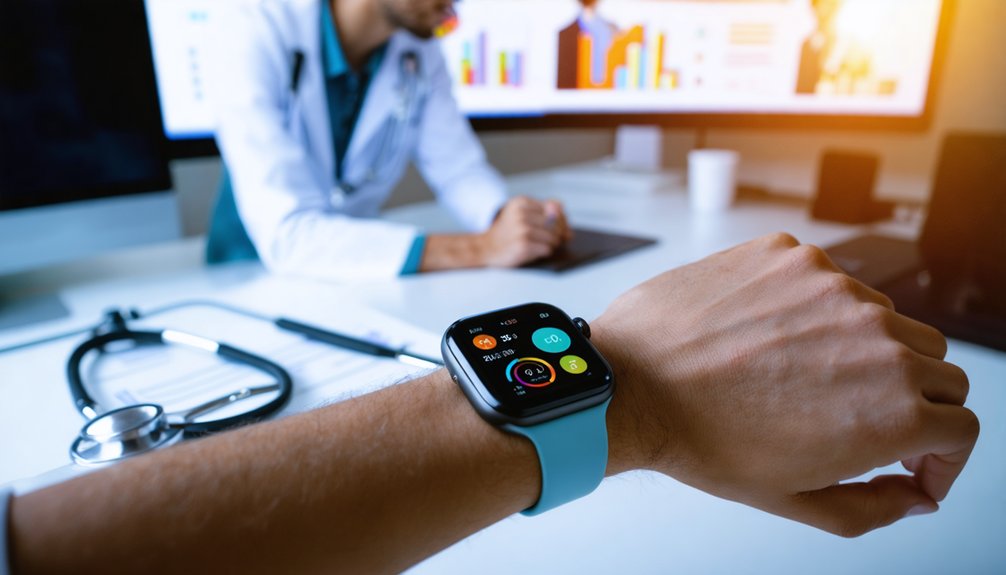

Wearables improve monitoring in clinical studies by enabling continuous data collection and real-time perspectives into patient health. They guarantee high participant adherence through engaging methodologies, such as automated notifications and post-study device retention. The technology supports precise tracking of physiological parameters, enhancing data quality and integrity. This leads to resilient evidence of clinical impact, especially in chronic disease management. Uncover how these advancements are shaping the future of clinical trials and participant experiences, offering valuable understanding into patient health and providing a deeper perspective.
Adoption Trends in Wearables Research
Although clinical trials historically relied on traditional data collection methods, the integration of wearables into research has shown a significant upward trend in adoption. Current estimates indicate that 10% to 15% of clinical trials leverage wearables, with projections suggesting a rise to 50% by 2025. The wearable sensor market is valued at $38.6 billion, forecasted to grow at a 19% CAGR to reach $54.6 billion by 2023, indicating a sturdy industry scenery. Additionally, the COVID-19 pandemic accelerated patient-centric trial designs, pushing researchers toward continuous remote monitoring capabilities. With nearly half of Americans owning wearable health devices and increasing regulatory support, the market analysis indicates that wearables will enhance clinical trial participation and data integrity, nurturing a sense of belonging among participants. This trend is further supported by the fact that approximately 1,600 clinical trials were conducted using wearables in 2020, underlining their growing integration into clinical research. The ability to monitor physiological parameters continuously will further drive adoption and improve the reliability of data collected in clinical studies. Moreover, wearable devices facilitate real-time data collection, allowing for timely interventions and improved participant engagement during trials.
Types of Wearables and Their Applications
As the scenery of clinical research evolves, various types of wearables play an essential role in enhancing data collection and patient monitoring. Physiological monitoring devices, such as smartwatches with ECG capabilities and continuous glucose monitors, streamline device validation processes while improving data integrity in trials. Additionally, wearable technology benefits medical researchers by facilitating easy data collection, which is crucial for obtaining accurate results. Wearables enable continuous, real-world data collection that enhances the efficiency of clinical trials. Activity and movement monitoring systems, including Fitbits and motion sensors, enable detailed tracking of physical functions pivotal in chronic disease management. Disease-specific tools like smart clothing and wearable ECG monitors support remote monitoring and timely interventions. Cognitive health assessment tools, utilizing EEG and galvanic skin response sensors, enhance understanding of mental health dynamics. Collectively, these wearables facilitate resilient data collection, nurturing confident regulatory submissions and advancing clinical research outcomes.
Quality of Data Collected From Wearables
The integration of wearables in clinical studies brings forth considerable challenges regarding the quality of data collected. Issues such as non-wear periods, missing data, and sensor artifacts substantially impact data integrity. Appropriate data validation requires three tiers: verification, analytical validation, and clinical validation, all aimed at ensuring reliability within target populations. Signal processing techniques, including the computation of signal quality scores, are essential for evaluating physiological data reliability. Additionally, device-related signal degradation and user variability introduce bias in data acquisition. Nighttime data collection tends to yield higher completeness, while on-device logging outperforms streaming methods with respect to data integrity. Adhering to regulatory standards is vital for maintaining the accuracy and security of the collected data, promoting trust in wearable technology in research. Wearables enable real-time data collection and facilitate deeper analyses of patient health, improving the clinical trial process. The impact of wearable-related challenges on data quality necessitates innovative solutions to enhance the overall reliability of collected data. Furthermore, the incorporation of wearables in clinical trials provides critical insights that aid in optimizing data collection methodologies.
Participant Adherence and Feasibility in Trials
Participant adherence and feasibility in clinical trials substantially influence the overall success and reliability of research outcomes. High adherence rates, often surpassing 90% in specific non-commercial wearables, are essential for ensuring data integrity. Adherence strategies such as allowing participants to retain devices post-study and providing automated notifications substantially enhance engagement. Additionally, returning health data fosters a sense of investment, while customized educational materials tailor the experience to participant needs. Reducing participant burden through passive data collection and minimizing in-person visits can improve adherence and retention. Device comfort and perceived value further affect adherence levels. Consequently, understanding these factors is imperative in designing effective clinical trials that prioritize participant adherence and engagement. Furthermore, it’s crucial to monitor and encourage adherence through follow-ups and reminders to ensure participants comply with study protocols.
Evidence of Clinical Impact From Wearable Integration
Wearable technology has revolutionized the terrain of clinical studies by providing resilient evidence of clinical impact through enhanced data collection and analysis methods.
Its integration facilitates improved detection of treatment efficacy, as continuous monitoring reveals subtle responses often missed during infrequent clinic visits.
Data analysis of digital biomarkers yields quantifiable endpoints that align with traditional clinical measures, reinforcing research methodology within study design.
Moreover, the FDA has increasingly acknowledged wearable-derived data for clinical validation, recognizing its role as legitimate evidence in regulatory submissions.
With 70% of planned trials projected to incorporate wearable sensors by 2025, the clinical impact of wearables is not just a trend; it’s a metamorphosis that promotes a deeper understanding of patient outcomes.
Enhancing Operational Efficiency Through Wearables
In recent years, enhancing operational efficiency in clinical studies has become increasingly achievable through the integration of wearable technology. The adoption of wearables facilitates operational streamlining by minimizing the need for in-person site visits, leading to higher retention rates and notable cost savings. Remote monitoring enables the collection of extensive health data while reducing logistical burdens associated with patient travel. With potential savings of $11,472 per patient and accelerated timelines through automated data capture, operational footprint is substantially decreased. Moreover, nearly 1,500 trials now leverage wearables, and analysts suggest that 70% will incorporate them by 2025. This shift not only supports clinical optimization but also promotes a more connected and engaged participant experience throughout trials. Additionally, the integration of wearable technology enables continuous, real-time monitoring of physiological and behavioral parameters that enhances the overall data quality in clinical trials.
Applications in Chronic Disease Management
As the terrain of healthcare evolves, the application of wearable technology in chronic disease management presents substantial advancements.
Wearables facilitate precise disease tracking, enabling healthcare providers to monitor conditions like hypertension and diabetes more effectively.
Studies have shown notable improvements in patient outcomes, such as reductions in systolic blood pressure and enhanced HbA1c levels through integrated wearable systems.
Moreover, the accurate detection of atrial fibrillation and adherence to medication regimens illustrates wearables’ role in proactive management.
By leveraging real-time data, care teams can make timely interventions, markedly reducing hospital visits for chronic respiratory diseases.
Ultimately, wearables enable patients to take ownership of their health, promoting better engagement and potentially more favorable health trajectories in chronic disease management.
Future Projections for Wearable Technology in Clinical Trials
The integration of wearable technology in chronic disease management has laid a resilient foundation for its future role in clinical trials.
Future projections indicate the wearable medical device market will surge to $53.73 billion by 2025, fueled by a compound annual growth rate of 25.90% through 2034.
With over 3,200 clinical trials planned for 2025, many will employ wearables for remote monitoring.
Technology advancements, including AI analytics and enhanced sensor capabilities, will facilitate real-time data collection, thereby augmenting patient profiles.
Regulatory structures are adapting, encouraging the incorporation of digital endpoints while standardizing validation protocols.
This collective momentum signals a promising evolution in clinical trial methodologies, promoting enhanced patient engagement and data integrity.
References
- https://pmc.ncbi.nlm.nih.gov/articles/PMC12063813/
- https://acrpnet.org/2024/10/22/enhancing-clinical-trials-with-wearable-digital-health-technologies-bridging-the-gap-between-data-and-real-life-patient-experiences
- https://www.quanticate.com/blog/wearables-in-clinical-trials
- https://www.nature.com/articles/s41598-022-25949-x
- https://www.appliedclinicaltrialsonline.com/view/the-future-fit-of-wearables-for-patient-centric-clinical-trials
- https://www.aparito.com/enhancing-global-studies-with-commercial-grade-wearable-data/
- https://careevolution.com/white-papers/choosing-a-commercially-available-wearable-device-for-your-research-study/
- https://learn.hms.harvard.edu/insights/all-insights/exploring-promise-wearable-devices-further-medical-research
- https://www.clinicalleader.com/doc/use-of-wearable-and-sensor-applications-in-clinical-trials-is-booming-0001
- https://rockhealth.com/insights/put-a-ring-on-it-understanding-consumers-year-over-year-wearable-adoption-patterns/