
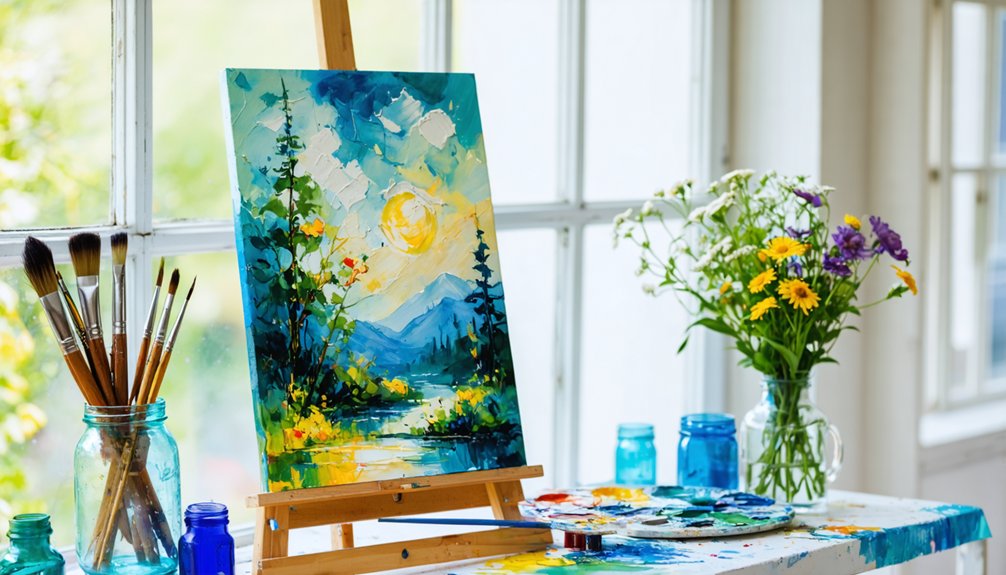

Creative expression substantially boosts mood by activating brain regions linked to emotion regulation and reducing stress hormone levels like cortisol. Engaging in art-making releases mood-enhancing neurochemicals such as dopamine and serotonin. This therapeutic process facilitates emotional clarity through non-verbal outlets, allowing individuals to articulate complex feelings. Additionally, creative engagement nurtures social connections and a sense of belonging in communities, further enhancing emotional well-being. Exploring the science behind these benefits reveals even more penetrating views into creativity’s impact.
The Science Behind Stress Relief Through Creativity
Although creativity has long been revered for its aesthetic and expressive qualities, emerging research reveals its deep-seated impact on stress relief and overall well-being. Engaging in art-making activates brain regions linked to emotion regulation and nurtures a “flow state,” where worries recede, enabling present-moment absorption. This not only lowers cortisol levels—a key stress hormone—but also increases mood-enhancing neurochemicals like dopamine and serotonin. Studies show universal stress reduction occurs across skill levels, demonstrating that anyone can benefit from creative expression. By incorporating mindfulness techniques, individuals can access these benefits more effectively, nurturing community and connection. Ultimately, leveraging creativity as a tool for stress reduction supports a collective experience of healing and emotional growth, utilizing imagination. Art therapy can be particularly effective in addressing stress levels among individuals facing psychological difficulties. Furthermore, engaging in creative activities can help regulate emotions through mechanisms such as distraction and contemplation. Recent studies indicate that making art can significantly reduce stress-related hormones in the body.
Emotional Outlets: Non-Verbal Expression in Art
Creative expression serves as a vital vehicle for emotional exploration, particularly through non-verbal avenues such as art. Art therapy enables individuals to externalize complex emotions, like anger or sadness, which can be difficult to articulate verbally. This non-verbal expression through mediums such as drawing, painting, and sculpting allows for a tangible process that converts intangible feelings into observable forms. By engaging with art materials, individuals gain a sense of control over overwhelming emotions and can develop practical tools for emotional regulation. Research demonstrates that consistent participation in art therapy enhances emotional identification, helping participants recognize and articulate their feelings more effectively. Ultimately, these creative processes nurture belonging and connection, making emotional expression accessible and affirming for many. Art therapy is shown to significantly reduce symptoms of anxiety and improve emotional regulation, further emphasizing its value in emotional healing. Engaging in these forms of art can also help lower cortisol levels and promote a calmer state of mind. Moreover, the use of structured art activities supports common autism traits, making it particularly beneficial for those on the spectrum.
Neurochemistry of Creativity: Mood Enhancement
As individuals engage in creative activities, the intricate interplay of neurochemicals can substantially enhance mood and nurture an environment conducive to innovative thought. Creative neuroscience reveals that dopamine facilitates cognitive flexibility and originality, promoting ideational flow. When dopamine levels rise, cognitive inhibition decreases, enabling broader associative thinking. Serotonin, essential for mood regulation, supports motivation and cognitive persistence, particularly under challenging emotional states. Moreover, engaging in art can lower cortisol, thereby reducing stress and enhancing emotional regulation. Oxytocin, released during collaborative efforts, promotes social bonds and encourages group creativity. Ultimately, achieving neurochemical balance through creative expression can cultivate resilience and promote a sense of belonging, reinforcing the rewarding benefits of creativity on mood enhancement. Research indicates that divergent thinking (DT) is closely linked to enhanced creative abilities, further illustrating the impact of creative activities on emotional well-being. Additionally, executive functions play a crucial role in facilitating creativity by supporting cognitive processes essential for ideation and problem-solving.
Achieving Flow: The Mindfulness of Creative Pursuits
Flow represents a state of deep immersion where the boundaries between self and activity dissolve, allowing individuals to engage in their creative pursuits with heightened focus and enjoyment. This phenomenon of creative absorption occurs when individuals face balanced challenges that match their abilities, nurturing intrinsic motivation. Flow induction techniques, such as deep breathing and setting clear goals, enhance the likelihood of entering this rewarding state. In flow, self-consciousness fades, time perceptions alter, and individuals receive immediate feedback from their creative tasks. Particularly, engaging in flow leads to reduced stress and strengthens social connections, providing a sense of belonging. Through these experiences, creators find not only purpose in their art but also significant enhancements to their overall mood and well-being, as the human brain is at its happiest when engaged in a meaningful activity. Additionally, engaging in creativity can serve to guard against the adverse consequences of living through traumatic events, further contributing to improved mental well-being.
Boosting Self-Confidence Through Creative Engagement
A powerful avenue for personal growth, engaging in creative activities has been shown to substantially enhance self-confidence. Through tangible accomplishments, individuals experience significant confidence building, often regardless of their skill level.
Research indicates that 70% of participants in creative arts therapy report improved self-perception, and dance therapy alone can lead to a 50% augmentation in self-confidence. Additionally, acquiring new techniques cultivates a sense of skill proficiency and ability, while creative expression facilitates emotional clarity, leading to increased self-awareness.
As individuals complete projects, they create visible evidence of their capabilities, reinforcing their belief in themselves. Overall, regular creative engagement reconfigures self-doubt into confidence, enabling individuals to accept their unique capacities and pilot life with a renewed sense of self-worth.
Fostering Community: The Social Benefits of Art
Art possesses a unique ability to nurture community cohesion and enhance social connections among individuals from diverse backgrounds. Research shows that 72% of Americans believe the arts unite people, fostering social bonds that strengthen community building.
Engagement in arts activities increases individuals’ likelihood to volunteer and participate actively, regardless of their background. Additionally, 86% of respondents acknowledge that arts and culture substantially contribute to their community’s quality of life. Public art and cultural initiatives create shared experiences, fostering a sense of belonging and dignity in neighborhoods.
These artistic pursuits not only enhance livability but also promote equity, making cultures more accessible and understood across communities. Through these shared experiences, art plays a crucial role in cultivating healthy, inclusive social connections.
Creative Expression and Identity Development
Creative expression serves as a powerful domain for individuals to investigate and develop their identities. Through creative exploration, individuals progress from mere enjoyment of activities, such as saying “I like drawing,” to integrating those experiences into their self-concept, ultimately saying “I am an artist.”
This passage of identity formation is shaped by both successes and setbacks within supportive environments, like academic settings, which balance original expression with learning objectives. Furthermore, creative undertakings provide safe spaces for reflection, allowing emerging adults to examine their identities and process complex emotions.
As individuals engage in art-making, they cultivate empathy and resilience, essential qualities for traversing identity shifts and expressing stories shaped by their unique experiences.
Long-Term Mental Health Benefits of Artistic Practices
Engagement in artistic practices has emerged as a significant factor in enhancing long-term mental health outcomes. Research indicates that regular participation in the arts correlates with a substantial reduction in depression incidence, with adults reporting 32% lower rates compared to non-participants.
This creative therapy nurtures mental wellness, facilitating greater emotional resilience and coping capabilities. Longitudinal studies further highlight lasting physiological benefits, revealing decreased stress markers and improved life satisfaction scores. Participants in community arts programs exhibit outstanding growth in social connectedness, often leading to a deep sense of belonging.
Ultimately, sustained involvement in artistic pursuits not only mitigates mental distress but also enhances quality of life, underscoring the essential role of creativity in nurturing mental health.
References
- https://www.mentalhealthctr.com/the-connection-between-creativity-and-mental-health/
- https://www.nami.org/Press-Media/Press-Releases/2023/New-Research-from-Adobe-Foundation-and-NAMI-Shows-Powerful-Benefits-of-Creative-Activities-on-Mental
- https://pmc.ncbi.nlm.nih.gov/articles/PMC10911317/
- https://www.psychiatry.org/news-room/apa-blogs/creative-arts-enhancing-mental-health
- https://www.mqmentalhealth.org/the-art-of-destressing-how-creativity-creates-less-stress/
- https://www.husson.edu/online/blog/2024/02/benefits-of-art-therapy
- https://www.who.int/news/item/25-09-2023-ground-breaking-research-series-on-health-benefits-of-the-arts
- https://www.frontiersin.org/journals/psychology/articles/10.3389/fpsyg.2024.1324415/full
- https://www.ie.edu/center-for-health-and-well-being/blog/unlocking-your-inner-artist-how-creative-hobbies-can-help-you-destress/
- https://drexel.edu/news/archive/2016/june/art_hormone_levels_lower