
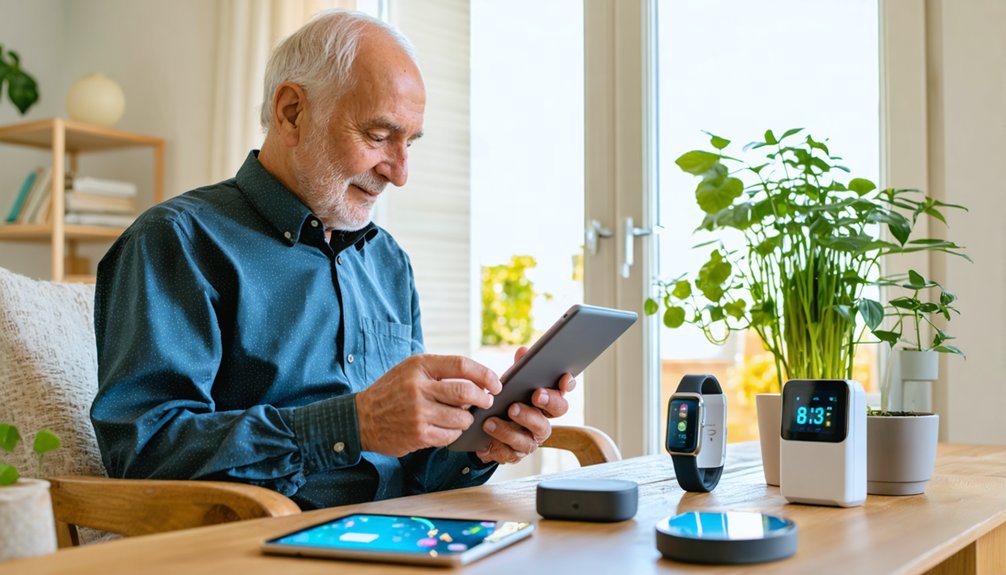

Remote care tools are increasingly crucial for older adults, addressing chronic disease management and promoting well-being. The remote patient monitoring market is projected to grow substantially, driven by rising demand for affordable healthcare solutions and advancements in telemedicine. As seniors adopt technology, tools like telehealth and AI-driven analytics enhance care coordination and improve health outcomes. These innovations ultimately reduce hospital admissions and enable autonomy. Continued exploration reveals more about the revolutionary potential of these solutions for the aging population to revolutionize.
Current Market Trends in Remote Patient Monitoring
As the healthcare scenery evolves, the remote patient monitoring (RPM) market is experiencing substantial growth, with projections indicating a global market value between USD 43.22 billion and USD 44.8 billion by 2024. Market analysis reveals a sturdy path, with estimates predicting that RPM could reach USD 88 billion by 2030, fueled by a compound annual growth rate (CAGR) of 12% from 2025 to 2030. Some forecasts even suggest a peak of USD 110.71 billion by 2033, driven by CAGRs of 19.83%. This growth is largely attributed to increased adoption in North America, which holds a 44.1% market share, while the Asia Pacific region is expected to emerge as a rapidly growing market due to digital healthcare advancements. This trend is also supported by the growing demand for affordable healthcare solutions, driving the adoption of remote patient monitoring devices. The rising prevalence of chronic diseases among the geriatric population further accelerates the need for these innovative solutions. Furthermore, approximately 85% of physicians recognize RPM as beneficial for chronic disease management, which underscores its importance in the healthcare ecosystem.
Demographic Factors Driving Adoption of RPM
Demographic factors play a pivotal role in the adoption of remote patient monitoring (RPM) technologies among older adults. Age-related adoption patterns indicate that individuals aged 60 and older often exhibit lower interest in RPM compared to younger groups, influenced by traditional attitudes toward innovation. Gender differences also impact adoption, with women showing a greater willingness to engage with digital health technologies than men. Socioeconomic barriers further complicate access; higher educational and income levels correlate with increased RPM utilization, while those in low-income urban areas face significant obstacles. Additionally, cultural differences, particularly among minority groups, result in lower RPM interest and lower patient portal utilization. Addressing these factors is essential for improving RPM access and acceptance among diverse older adult populations. This is particularly concerning given that digital health technologies have the potential to increase healthcare access for older adults.
Clinical Applications Enhancing Health Outcomes
Remote patient monitoring (RPM) technologies are making major advancements in clinical applications that enhance health outcomes for older adults. These innovative health solutions optimize chronic disease management through real-time tracking of conditions such as diabetes and hypertension, enabling immediate treatment adjustments. In postoperative care, RPM substantially reduces hospital visits by facilitating virtual follow-ups and allowing timely rehabilitation plan modifications. Remote care tools telehealth capabilities improve communication between seniors and caregivers, fostering timely interventions when needed. Medication adherence interventions strengthen compliance and decrease complications, reflecting a substantial 7.6× return on investment. Additionally, integrated health-social care coordination effectively addresses both medical and emotional needs, promoting comprehensive well-being.
The Impact of RPM on Hospitalization Rates
The integration of remote patient monitoring (RPM) technologies has been shown to substantially impact hospitalization rates, particularly among older adults with chronic conditions. Evidence indicates a 59% reduction in hospital admissions within six months post-enrollment, with average admissions decreasing from 1.38 to 0.57. Especially, cardiac patients experienced a 50% drop in 30-day readmissions. RPM has also demonstrated improved outcomes, such as a 95.5% recovery rate from COVID-19 among participants. High-risk patient cohorts managing congestive heart failure and hypertension experienced significant hospitalization reductions, further emphasizing RPM’s effectiveness. As hospitals increasingly adopt these technologies, the resultant reduced admissions not only alleviate healthcare system burdens but also promote a stronger sense of community and engagement among older adults. Research shows that RPM can reduce avoidable hospitalizations and emergency department visits, further enhancing the overall effectiveness of healthcare interventions for older adults. Implementing RPM technologies can lead to a reduction in hospital readmissions by up to 25%, improving patient outcomes and reducing healthcare costs. Furthermore, studies found a clear downward trend in the risks of hospital admission/readmission, demonstrating the effectiveness of RPM interventions in maintaining patients’ well-being.
Technological Innovations in Remote Care
As advancements continue to reshape healthcare delivery, technological innovations in remote care are proving essential for enhancing quality of life among older adults.
Senior-friendly telehealth platforms now offer simplified direction and larger text interfaces, promoting independence among users.
With 90% of Americans over 50 owning smartphones, accessing virtual coaching and telehealth services has never been easier.
AI-driven predictive analytics track health patterns, flagging early signs of cognitive decline and ensuring timely interventions.
Smart home safety integrations, such as motion-sensor lighting and voice-activated controls, further strengthen security.
Additionally, robotic assistance for medication notifications and social engagement promotes companionship.
Collectively, these tools facilitate effective care direction, enabling older adults to maintain their well-being and stay connected with loved ones.
Overcoming Adoption Challenges Among Seniors
Access to innovative remote care tools has increased substantially, yet numerous challenges hinder their widespread adoption among older adults.
Accessibility barriers such as hearing and vision impairments, along with cognitive limitations, complicate usage, highlighting the need for adaptive telehealth interfaces.
Many seniors rely heavily on caregiver support, with 82% of homebound older adults needing assistance to traverse these tools.
Furthermore, technology anxiety and varying levels of digital literacy can deter adoption.
Rural infrastructure gaps further exacerbate these challenges, impeding access to reliable broadband.
Addressing these issues through personalized training and reassurance about privacy can nurture trust and facilitate smoother shifts to remote care solutions, ultimately encouraging greater engagement among older adults.
The Role of Telemedicine in Elderly Care
Telemedicine plays a crucial role in enhancing elderly care, particularly as the demand for accessible healthcare solutions grows, and it is also essential.
With 43.3% of seniors utilizing telemedicine in 2021, many have benefited from improved elderly support and senior assistance.
The pandemic substantially boosted telehealth adoption, resulting in a 63-fold increase in usage by 2020.
Enhanced access enables seniors to receive timely care, reducing hospital admissions and lowering exposure to seasonal illnesses.
Telepsychiatry has remarkably improved mental health service delivery, while electronic health record integration facilitates effective communication between healthcare providers.
As Medicare telehealth coverage continues through 2025, it remains critical for maintaining the health and well-being of older adults, allowing them to thrive in their communities, which is crucial.
Future Projections for Remote Care Tools in Aging Population
The expanding scenery of telemedicine has set the foundation for innovative remote care tools customized to the aging population.
As the geriatric demographic swells, with projections suggesting 1.5 billion elderly individuals by 2025, the need for effective care direction solutions intensifies.
Remote patient monitoring (RPM) will flourish, driven by AI analytics that personalize care and decrease hospital readmissions.
Companion robots and smart home technology are anticipated to combat social isolation, enhancing daily interactions and overall well-being.
By 2030, the global AI-powered elderly care market is projected to reach $2.249 billion, reflecting ongoing investment in supportive technologies.
These advancements aim to enable older adults to age independently while ensuring a connected, nurturing environment.
References
- https://intuitionlabs.ai/articles/remote-patient-monitoring-united-states-2025-landscape
- https://aging.jmir.org/2025/1/e76653
- https://pmc.ncbi.nlm.nih.gov/articles/PMC12512857/
- https://www.tenovi.com/remote-patient-monitoring-for-seniors-economic-and-health-impact/
- https://milkeninstitute.org/content-hub/research-and-reports/reports/future-connected-care-enabling-healthy-longevity-and-aging-home
- https://www.ama-assn.org/practice-management/digital-health/senior-patients-happy-telehealth-and-want-it-care-option
- https://www.ageinplacetech.com/blog/caregiving-us-2025-more-tech-not-much-caregivers-could-use
- https://www.ncoa.org/article/how-technology-is-helping-older-adults-thrive-in-rural-america/
- https://www.aha.org/fact-sheets/2025-02-07-fact-sheet-telehealth
- https://caringseniorservice.com/blog/telehealth-for-seniors/