
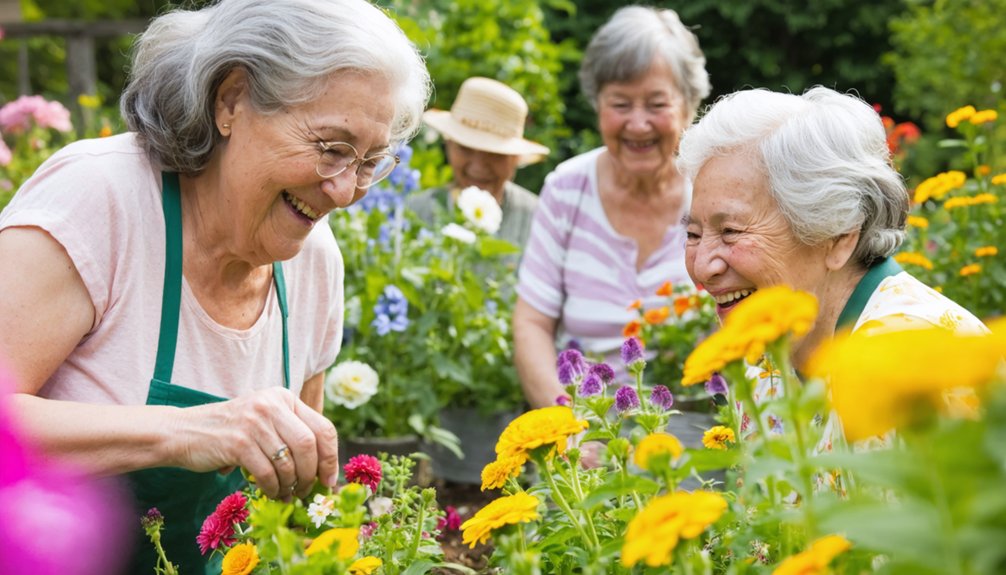

Group activities enhance senior well-being by promoting cognitive resilience, improving mental health, and promoting physical fitness. These interactions create crucial social connections, reducing feelings of loneliness and depression. Participation in structured group settings leads to improved cognitive performance and emotional regulation, while physical activities enhance strength and stability. Engaging in diverse group activities augment quality of life and promotes a sense of purpose. Exploring the long-term impacts can reveal deeper understanding into the benefits of group involvement, which can increase the chances to disclose more profound knowledge and promote a crucial understanding.
Cognitive Benefits and Protection Against Decline
As older adults traverse the complexities of cognitive aging, engaging in group activities emerges as a crucial strategy for enhancing cognitive health and mitigating decline. Research highlights the superior cognitive preservation benefits of group engagement over individual interactions. Active participation in community activities, especially volunteering, substantially correlates with improved cognitive performance over time. Statistical analyses reveal that vigorous group involvement can equate cognitive functioning to that of much younger individuals, showcasing the protective effects against cognitive decline. Additionally, frequent, pleasant social stimulation enhances immediate cognitive abilities, nurturing neural resilience. Accumulating research shows that social activity has a positive benefit on health and well-being. Notably, frequent social interactions with friends are particularly beneficial for cognitive function, reinforcing the importance of group dynamics in maintaining cognitive health. Furthermore, about 10 percent of people previously diagnosed with mild cognitive impairment develop Alzheimer’s disease or other forms of dementia every year, emphasizing the critical need for engaging in stimulating group activities to bolster cognitive resilience.
Mental Health Improvements and Depression Reduction
Engaging in structured group activities substantially contributes to mental health improvements and the reduction of depression among older adults. Research indicates that participation in group arts interventions, such as music therapy and clay modeling, substantially diminishes depression symptoms, often matching the efficacy of pharmacological treatments. These mood therapy modalities provide a creative outlet for emotional expression, leveraging collaborative processes that facilitate non-verbal emotional processing.
Moreover, interventions like cooking and structured exercise programs have shown marked reductions in depressive symptoms, especially in those with mild dementia. Cumulatively, sustained participation promotes self-efficacy and a lasting decrease in depression recurrence rates, highlighting the importance of group activities in enhancing psychological well-being and creating a deep sense of belonging among seniors. Additionally, group therapy demonstrates significant positive effects on cognitive abilities, contributing to improved emotional regulation and overall mental health. Recent studies have also shown that participating in evidence-based strength training programs can lead to enhanced self-confidence and overall well-being among older adults.
Such activities also promote overall health, as they encourage physical engagement alongside social interaction, further benefiting mental health outcomes.
Social Connection and Reduced Isolation
Although many older adults experience social isolation, participation in group activities has proven essential for promoting social connections and reducing feelings of loneliness. Group activities create natural opportunities for meeting others with shared interests, cultivating community building and enhancing interpersonal networks. Evidence suggests that structured engagement in these activities leads to substantially lower levels of loneliness among seniors. For instance, organized group reminiscence sessions nurture bonds between residents, while peer support dynamics provide emotional connections and minimize feelings of isolation. By maintaining stronger community ties and encouraging regular social interactions, seniors not only combat social isolation but also report higher levels of perceived belonging within their communities, underscoring the deep-seated impact of group activities on well-being. Furthermore, social connections play a critical role in reducing the risks of chronic loneliness among seniors, which is linked to serious health issues such as cognitive decline. Additionally, participation in group activities is associated with improved cognitive health, further enhancing the overall quality of life for seniors.
Physical Health and Daily Functioning Enhancements
Group activities substantially enhance physical health and daily functioning among seniors, addressing crucial aspects of their well-being. Research indicates that group exercise programs markedly improve balance and stability, effectively contributing to fall prevention. Structured group activities utilize peer modeling, leading to enhanced coordination and spatial awareness. Remarkably, participation in strength training within group settings leads to measurable increases in muscle strength, improving overall mobility and functional capacity. Regular engagement in these programs not only promotes joint flexibility but also enables seniors to perform daily tasks with greater independence. Longitudinal studies demonstrate that consistent participation correlates with improved health outcomes, ultimately reducing the risk of chronic conditions and enhancing seniors’ quality of life, leveraging essential aspects of their well-being to capitalize on their potential. Additionally, group movement activities provide a sense of purpose and joy, which further encourages seniors to stay active and engaged.
Diversity and Breadth of Group Engagement
When considering the impact of diversity on group engagement among seniors, it becomes evident that a wide array of participation enhances overall well-being. Diverse groups promote community engagement, as they draw individuals from various residential areas, age groups, and genders.
This heterogeneity correlates with improved self-rated health outcomes, particularly through activities that encourage intergenerational connections. Participation in varied groups combats loneliness and depressive symptoms while creating meaningful relationships across demographics. Activities such as gardening, cultural events, and technology collaboration stimulate cognitive function and augment seniors’ social experiences.
Additionally, diverse group involvement not only helps break down stereotypes but also enhances emotional well-being, reinforcing the notion that engagement in diverse settings substantially benefits seniors’ quality of life.
Enhanced Quality of Life
Enhanced quality of life for seniors emerges as a critical aspect of promoting well-being in later years, with group activities playing a pivotal role in this improvement.
Engaging in leisure activities, particularly within structured environments, substantially enhances cognitive, physical, and psychological aspects of seniors’ lives.
Research indicates that group exercise programs lead to substantial improvements in physical capabilities and emotional well-being, with resistance training remarkably boosting self-esteem.
Additionally, social connections formed during these activities promote a sense of belonging, further enhancing quality of life.
Concurrent participation in therapy sessions and aerobic exercises has shown to reduce depressive symptoms, while structured group settings guarantee older adults enjoy sustained social interaction, essential for successful aging and overall vitality.
Purposeful Engagement Through Meaningful Activities
Purposeful engagement is essential for seniors seeking to improve their well-being and sense of belonging. Research indicates that meaningful activities, including volunteering, lifelong learning, and intergenerational programs, cultivate personal growth and fulfill the human need for connection.
By employing a person-centered approach in activity planning, preferences and capabilities can be matched with activities that harmonize with individual interests. The dividends of such engagement are significant, linking consistent participation to enhanced cognitive, emotional, and physical health. Barriers, such as lack of opportunity or companionship, must be addressed to facilitate these connections.
Ultimately, personalized and meaningful activities not only promote social engagement but also invigorate a sense of purpose, leading to an improved quality of life.
Long-term Benefits of Structured Social Participation
Structured social participation offers significant long-term benefits for seniors, fundamentally enhancing their overall health and well-being. Evidence indicates that active social engagement leads to reduced cognitive decline and a 40% lower risk of developing dementia.
Regular interactions within structured groups also decrease physical disability rates, promoting mobility and independence. Moreover, community outreach initiatives encourage intergenerational connections, augmenting the lives of seniors and younger participants alike.
This social cohesion promotes psychological well-being, decreasing distress and enhancing resilience. Additionally, sustained group involvement improves health behaviors and access to essential health information.
References
- https://www.matherinstitute.com/2015/03/09/closer-look-social-activities-greatest-cognitive-benefit/
- https://www.thehighpointresidence.com/blog/the-impact-of-regular-social-activities-on-seniors-mental-health
- https://pmc.ncbi.nlm.nih.gov/articles/PMC5505561/
- https://www.countyhealthrankings.org/strategies-and-solutions/what-works-for-health/strategies/activity-programs-for-older-adults
- https://pmc.ncbi.nlm.nih.gov/articles/PMC6192976/
- https://junipercommunities.com/the-role-of-social-activities-in-enhancing-well-being/
- https://www.prb.org/resources/todays-research-on-aging-44-more-than-a-feeling-how-social-connection-protects-health-in-later-life/
- https://academic.oup.com/innovateage/article/9/4/igaf009/8029916
- https://www.psu.edu/news/research/story/socializing-may-improve-older-adults-cognitive-function-daily-life
- https://stories.tamu.edu/news/2024/09/10/games-puzzles-and-reading-can-slow-cognitive-decline-in-the-elderly-even-in-those-with-mild-cognitive-impairment/